



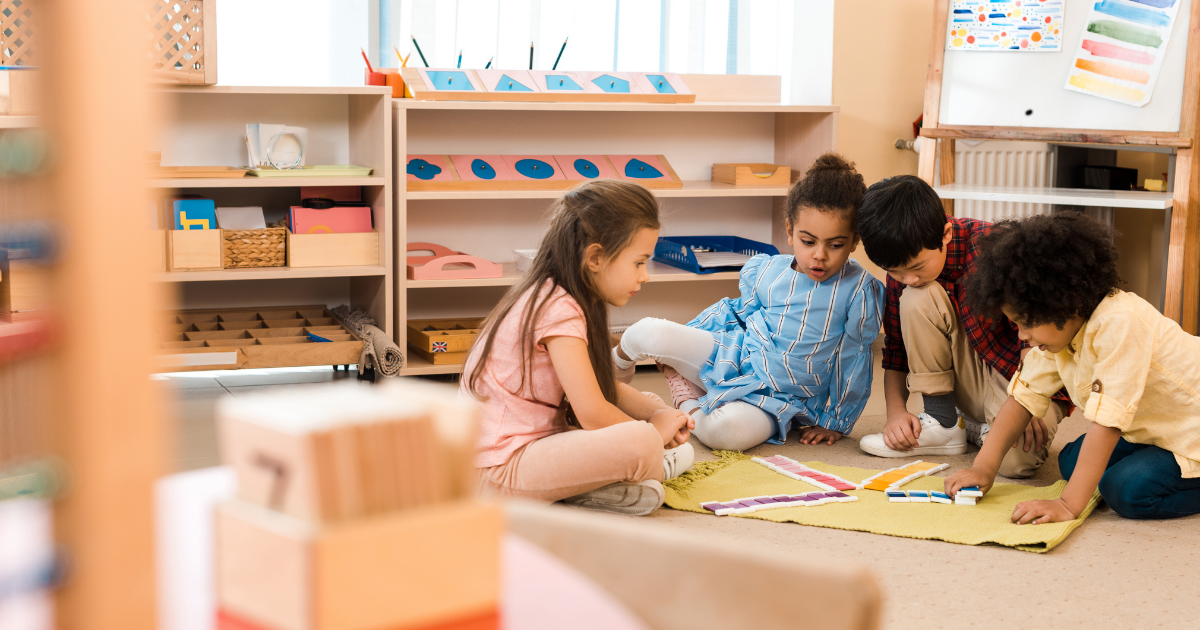
Preschool is more than a place where children play, explore, and spend time. It is a critical period of growth that lays the groundwork for every area of a child’s development (cognitive, social, emotional, and academic). The early years shape how children at the best private schools in Miami learn, relate to others, understand the world, and build confidence. When a child attends a high-quality preschool program, they gain skills and experiences that directly influence their future success in school and beyond.
Below, we explore the key reasons why preschool matters and what happens when these foundational years are missed.
1. Social, emotional, and cognitive development
Preschool is one of the first structured environments where children learn how to navigate the world alongside peers. During these years, children build crucial developmental skills that cannot be taught through worksheets or one-on-one learning at home.
Social Development: Preschool exposes children to group experiences. These interactions teach self-control, patience, flexibility, and empathy. Children who skip preschool often struggle initially in kindergarten with:
- Waiting their turn
- Managing frustration
- Understanding classroom routines
- Working in groups
- Separating from caregivers
These delays are not due to lack of intelligence; they simply haven’t had the practice.
Emotional Development: Preschool teachers help children name and understand their emotions, learn coping strategies, and build resilience. Without preschool, many children arrive in kindergarten without tools to manage big emotions in a classroom setting, leading to overwhelm, behavioral challenges, or difficulty engaging in learning.
Cognitive Development: Children in preschool are constantly exposed to exploration, open-ended questions, problem-solving, and guided discovery. These activities strengthen attention, memory, creativity, and critical thinking skills. Missing these experiences can leave gaps in areas like focus and task persistence. Preschool doesn’t just prepare children academically, it prepares their brains for school.
2. Laying the foundations for literacy
Preschool is where early literacy skills first take shape through play, storytelling, conversation, and exposure to books. During ages 3 to 5, children experience rapid vocabulary growth, and a preschool classroom at the best private schools in Miami supports this by surrounding them with rich language throughout the day through songs, conversations, circle time, and read-alouds. These experiences help children learn new words, understand sentence structure, and develop essential communication skills.
Beyond spoken language, preschool introduces the early reading behaviors children need before they can ever decode text. Young learners begin practicing skills such as recognizing letters, understanding letter sounds, identifying rhymes, holding books correctly, and listening to stories with attention and curiosity. These foundational abilities gradually build toward reading readiness.
When children skip preschool, they often miss out on consistent exposure to this early literacy environment. As a result, they may enter kindergarten with a smaller vocabulary, less familiarity with books, and weaker pre-reading skills. Without these early experiences, children may require additional support once formal reading instruction begins.
3. Building early math understanding
Many parents assume math begins in kindergarten, but mathematical thinking starts in preschool through hands-on exploration and meaningful play.
Children learn to:
- Count objects
- Recognize shapes and patterns
- Compare sizes and quantities
- Sort and classify
- Understand simple sequences
These early math concepts form a base for more complex skills like addition, subtraction, and problem-solving. A child who skips preschool may enter kindergarten unfamiliar with number concepts or lacking confidence with math manipulatives. This hesitation can follow them into later grades, where math becomes increasingly abstract.
4. Support for elementary school and beyond
One of the clearest benefits of preschool is that it gives children a smoother transition into elementary school. Preschool graduates arrive understanding:
- Classroom rules and routines
- How to follow directions
- How to work independently and collaboratively
- How to communicate needs appropriately
Children without this background often need weeks or months to adjust, which can delay academic progress. Furthermore, studies consistently show that children who attend preschool:
- Perform better academically through elementary school
- Show stronger social skills
- Have better attendance
- Demonstrate improved confidence and motivation
Preschool is not simply preparation for kindergarten. It shapes social skills, emotional intelligence, language development, early literacy, and foundational math understanding. While children can learn at home, the structured, peer-based, enriched environment of preschool offers experiences that cannot be replicated in isolation. Choosing a high-quality preschool at the best private schools in Miami is one of the most meaningful investments a family can make in a child’s future. It creates a foundation that supports them academically, socially, and emotionally as they grow.
